Ultimate Guide to Builders Waste Clearance in Regents Park
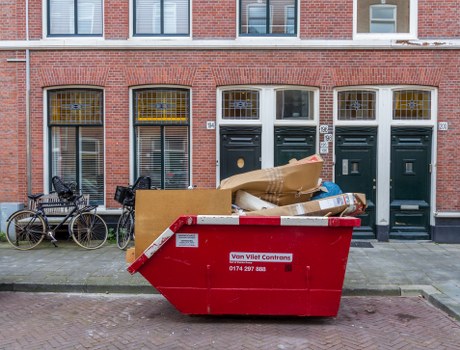
A large red waste skip with a white and red label is positioned on the pavement in front of a row of brick residential buildings. The skip contains various types of rubbish, including cardboard boxes, plastic bags, and assorted packaging materials, some protruding above the rim. To the left of the skip, there are two bicycles leaning against the building's front fence, which features vertical metal bars. The background shows four front doors of the terraced houses, each painted dark green or white, with decorative glass panels and house numbers visible. The brickwork of the buildings is red and brown, with some yellow detailing around the window frames and doors. The scene is set during daylight hours, with natural light casting minimal shadows, indicative of an overcast day. The image reflects a typical urban environment in London, with clear relevance to rubbish removal services offered by Commercial Waste Regents Park in the local area, helping manage builder's waste and general rubbish clearance.

Introduction to Builders Waste Clearance

Building projects, whether large or small, inevitably produce a significant amount of waste. Proper disposal and clearance of this waste are crucial not only for maintaining a clean and safe environment but also for ensuring the project progresses smoothly without any legal complications. In Regents Park, the demand for efficient builders waste clearance services has been on the rise, driven by the area's bustling construction activities.

Builders waste typically includes materials like concrete, bricks, wood, metals, and other construction debris. Managing this waste responsibly helps in recycling materials, reducing landfill use, and promoting sustainability within the community.

Choosing the right waste clearance service is essential to handle the diverse types of debris effectively. This guide explores the key aspects of builders waste clearance in Regents Park, helping both contractors and homeowners make informed decisions.

A long row of discarded old computer monitors and CRT screens, varying in size and shape, are lined up on a concrete pavement outside a brick building. The monitors display screens with visible glass and plastic casings, some with cables and wires hanging loosely from their backs. Several units have grey or beige plastic enclosures, with textures ranging from smooth to slightly textured surfaces. The monitors are stacked or placed directly on top of each other, with some leaning against the brick wall behind them. In the background, there is a window with white framing reflecting greenery from outside, showing gardening or natural surroundings. The scene suggests an area designated for electronic waste disposal, handled by a waste management service such as Commercial Waste Regents Park, in the vicinity of Regents Park or a nearby postcode district. The lighting is natural, casting soft shadows along the pavement, emphasizing the array of electronic scrap awaiting collection or recycling as part of a rubbish clearance process in London or the surrounding area.

Why Proper Waste Clearance Matters

Effective waste clearance is more than just tidying up a construction site. It plays a pivotal role in maintaining health and safety standards, complying with local regulations, and minimizing environmental impact.

Health and Safety: Accumulated waste can pose significant risks, including accidents caused by tripping over debris or exposure to hazardous materials. Proper clearance ensures a safer working environment for everyone involved.

Regulatory Compliance: Regulations in Regents Park require builders to manage their waste responsibly. Failure to comply can result in hefty fines and project delays, making effective waste management not just beneficial but mandatory.

A worker wearing a safety helmet and casual clothing is using a long-handled tool to clear rubbish from the ground into a large, open-top skip situated on a paved surface. The skip, made of metal, appears to be filled with mixed waste, including cardboard, plastic, and other debris. Loose waste materials are scattered around the base of the skip, some on the ground and others spilling out from the opening, indicating active rubbish removal. The environment suggests an outdoor industrial or urban setting, with a textured asphalt or concrete surface visible. The scene's lighting is consistent with daylight, providing clear visibility of the waste materials, worker, and equipment. This image depicts typical rubbish clearance activities that Commercial Waste Regents Park might undertake for commercial or construction clients in the London area, supporting their services in builders waste removal and waste management solutions.

Types of Builders Waste

Understanding the different types of builders waste is the first step in managing it effectively. Common categories include:

  • Concrete and Bricks: Often leftover from foundations and walls, these materials can be recycled or repurposed.
  • Wood: Includes scrap timber and plywood, which can be reused or processed into mulch.
  • Metals: Such as steel beams and rebar, which are highly recyclable.
  • Plastics: Used in various construction elements and can be recycled to reduce environmental impact.
  • Drywall and Insulation: These materials require specific disposal methods to prevent environmental contamination.

Proper classification ensures that each type of waste is handled in the most efficient and environmentally friendly manner.

A person standing behind a metal wheelbarrow filled with loose soil, positioned on a paved pathway in a garden or residential outdoor area. The wheelbarrow has a rust-colored basin and black rubber tires, with the soil appearing dark and moist. The person is wearing blue jeans and work gloves, though only their legs and hands are visible. To the left, there is green shrubbery with leafy foliage, and to the right, a neatly maintained grassy area. In the background, the pathway extends with a slight curve, bordered by more greenery, and sunlight filters through, creating a bright, outdoor ambiance. The scene suggests a gardening or landscaping activity, typical of waste clearance or property maintenance services provided by companies like Commercial Waste Regents Park, supporting efficient rubbish removal solutions near Regents Park and London postcodes.

Choosing the Right Waste Clearance Service

Selecting a reliable waste clearance service is crucial for the smooth operation of any construction project. Here are key factors to consider:

  1. Experience and Expertise: Look for companies with a proven track record in handling builders waste specifically in Regents Park.
  2. Comprehensive Services: The service should cover all types of waste, from demolition debris to hazardous materials.
  3. Compliance with Regulations: Ensure the company adheres to local disposal laws and has the necessary licenses.
  4. Environmental Commitment: Choose a service that emphasizes recycling and sustainable disposal methods.
  5. Customer Service: Responsive and professional customer support can make the clearance process hassle-free.

By evaluating these factors, you can select a service that aligns with your project’s specific needs and environmental goals.
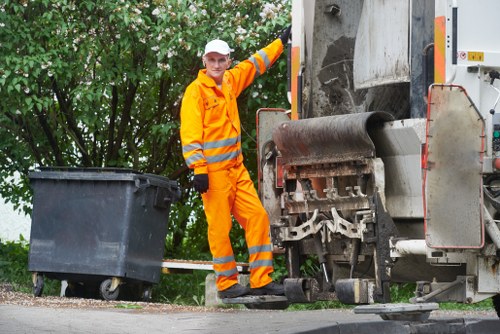
A waste collection worker dressed in high-visibility orange safety clothing, including a jacket with reflective stripes and a white hard hat, is standing beside a large commercial rubbish collection vehicle on a residential street. The worker is holding onto the open side panel of the vehicle, which reveals the loading area, and is positioned near a black wheeled rubbish bin placed on the pavement. The background features green leafy trees and shrubbery, indicating an outdoor urban environment. The rubbish truck is grey with orange and yellow safety markings, and the scene is illuminated by natural daylight, suggesting a clear day. This image illustrates routine rubbish removal services, likely provided by Commercial Waste Regents Park, suitable for accommodating various waste types within the local Regents Park area and contributing to effective waste management in the community.

Benefits of Professional Builders Waste Clearance

Engaging a professional waste clearance service offers numerous advantages:

  • Efficiency: Professionals can quickly and effectively remove waste, saving time and labor costs.
  • Safety: Proper handling reduces the risk of accidents and exposure to hazardous materials.
  • Environmental Protection: Responsible disposal methods minimize the environmental footprint of your project.
  • Regulatory Compliance: Ensures all waste is disposed of according to local laws, avoiding fines and delays.
  • Space Management: Keeping the construction site clear enhances workflow and productivity.

These benefits contribute to the overall success and sustainability of construction projects in Regents Park.

A large red waste skip with a white and red label is positioned on the pavement in front of a row of brick residential buildings. The skip contains various types of rubbish, including cardboard boxes, plastic bags, and assorted packaging materials, some protruding above the rim. To the left of the skip, there are two bicycles leaning against the building's front fence, which features vertical metal bars. The background shows four front doors of the terraced houses, each painted dark green or white, with decorative glass panels and house numbers visible. The brickwork of the buildings is red and brown, with some yellow detailing around the window frames and doors. The scene is set during daylight hours, with natural light casting minimal shadows, indicative of an overcast day. The image reflects a typical urban environment in London, with clear relevance to rubbish removal services offered by Commercial Waste Regents Park in the local area, helping manage builder's waste and general rubbish clearance.

Steps Involved in Builders Waste Clearance

The waste clearance process typically involves several steps to ensure efficiency and compliance:

  1. Assessment: Evaluating the types and quantities of waste generated.
  2. Segregation: Sorting waste into categories for appropriate disposal.
  3. Collection: Transporting waste from the site to disposal or recycling centers.
  4. Disposal: Properly disposing of non-recyclable materials in accordance with regulations.
  5. Recycling: Processing recyclable materials to reduce environmental impact.

Each step requires careful planning and execution to ensure that waste is managed responsibly and efficiently.

A long row of discarded old computer monitors and CRT screens, varying in size and shape, are lined up on a concrete pavement outside a brick building. The monitors display screens with visible glass and plastic casings, some with cables and wires hanging loosely from their backs. Several units have grey or beige plastic enclosures, with textures ranging from smooth to slightly textured surfaces. The monitors are stacked or placed directly on top of each other, with some leaning against the brick wall behind them. In the background, there is a window with white framing reflecting greenery from outside, showing gardening or natural surroundings. The scene suggests an area designated for electronic waste disposal, handled by a waste management service such as Commercial Waste Regents Park, in the vicinity of Regents Park or a nearby postcode district. The lighting is natural, casting soft shadows along the pavement, emphasizing the array of electronic scrap awaiting collection or recycling as part of a rubbish clearance process in London or the surrounding area.

Cost Factors of Waste Clearance

The cost of builders waste clearance can vary based on several factors:

  • Volume of Waste: Larger quantities generally incur higher costs.
  • Type of Waste: Hazardous or specialized materials may require additional handling fees.
  • Frequency of Clearance: Regular pickups may offer discounted rates compared to one-time services.
  • Accessibility of Site: Difficult-to-reach locations can increase labor and transportation costs.
  • Recycling and Disposal Fees: Costs associated with processing and disposal methods.

Understanding these factors can help in budgeting and selecting a service that offers the best value for your specific needs.

A worker wearing a safety helmet and casual clothing is using a long-handled tool to clear rubbish from the ground into a large, open-top skip situated on a paved surface. The skip, made of metal, appears to be filled with mixed waste, including cardboard, plastic, and other debris. Loose waste materials are scattered around the base of the skip, some on the ground and others spilling out from the opening, indicating active rubbish removal. The environment suggests an outdoor industrial or urban setting, with a textured asphalt or concrete surface visible. The scene's lighting is consistent with daylight, providing clear visibility of the waste materials, worker, and equipment. This image depicts typical rubbish clearance activities that Commercial Waste Regents Park might undertake for commercial or construction clients in the London area, supporting their services in builders waste removal and waste management solutions.

Environmental Impact of Builders Waste

Improper disposal of builders waste can have severe environmental consequences:

  • Landfill Overuse: Excessive waste fills up landfills, leading to land use issues and increased methane emissions.
  • Resource Depletion: Non-recycled materials require new resources to be mined or produced, increasing environmental strain.
  • Pollution: Hazardous materials can contaminate soil and water sources if not handled correctly.
  • Energy Consumption: Manufacturing new materials from raw resources consumes more energy compared to recycling existing materials.

By implementing effective waste clearance strategies, the construction industry can mitigate these negative impacts and promote a more sustainable future.

A person standing behind a metal wheelbarrow filled with loose soil, positioned on a paved pathway in a garden or residential outdoor area. The wheelbarrow has a rust-colored basin and black rubber tires, with the soil appearing dark and moist. The person is wearing blue jeans and work gloves, though only their legs and hands are visible. To the left, there is green shrubbery with leafy foliage, and to the right, a neatly maintained grassy area. In the background, the pathway extends with a slight curve, bordered by more greenery, and sunlight filters through, creating a bright, outdoor ambiance. The scene suggests a gardening or landscaping activity, typical of waste clearance or property maintenance services provided by companies like Commercial Waste Regents Park, supporting efficient rubbish removal solutions near Regents Park and London postcodes.

Recycling Initiatives in Regents Park

Regents Park is committed to promoting recycling within the construction sector. Many waste clearance services collaborate with local recycling facilities to ensure materials like metals, wood, and concrete are repurposed rather than discarded.

Benefits of Recycling:

  • Reduces Landfill Use: Recycling diverts waste from landfills, preserving space for future use.
  • Conserves Natural Resources: Reusing materials minimizes the need for new raw materials.
  • Energy Savings: Manufacturing with recycled materials typically consumes less energy.
  • Economic Advantages: Recycling can create jobs and support local industries.

Embracing these initiatives not only aids in compliance but also enhances the environmental stewardship of construction projects.

A waste collection worker dressed in high-visibility orange safety clothing, including a jacket with reflective stripes and a white hard hat, is standing beside a large commercial rubbish collection vehicle on a residential street. The worker is holding onto the open side panel of the vehicle, which reveals the loading area, and is positioned near a black wheeled rubbish bin placed on the pavement. The background features green leafy trees and shrubbery, indicating an outdoor urban environment. The rubbish truck is grey with orange and yellow safety markings, and the scene is illuminated by natural daylight, suggesting a clear day. This image illustrates routine rubbish removal services, likely provided by Commercial Waste Regents Park, suitable for accommodating various waste types within the local Regents Park area and contributing to effective waste management in the community.

Innovations in Waste Management

The waste management industry is continually evolving, with new technologies and methods enhancing efficiency and sustainability:

  • Smart Bins: Equipped with sensors to monitor waste levels and optimize collection schedules.
  • Automated Sorting: Advanced systems that improve the accuracy and speed of waste segregation.
  • Waste-to-Energy: Converting non-recyclable waste into energy, reducing landfill dependence.
  • Recycling Technologies: Innovations that enhance the processing and quality of recycled materials.
  • Digital Tracking: Utilizing software to track waste from collection to disposal, ensuring transparency and compliance.

These advancements contribute to more effective and environmentally friendly waste management practices in Regents Park.

A large red waste skip with a white and red label is positioned on the pavement in front of a row of brick residential buildings. The skip contains various types of rubbish, including cardboard boxes, plastic bags, and assorted packaging materials, some protruding above the rim. To the left of the skip, there are two bicycles leaning against the building's front fence, which features vertical metal bars. The background shows four front doors of the terraced houses, each painted dark green or white, with decorative glass panels and house numbers visible. The brickwork of the buildings is red and brown, with some yellow detailing around the window frames and doors. The scene is set during daylight hours, with natural light casting minimal shadows, indicative of an overcast day. The image reflects a typical urban environment in London, with clear relevance to rubbish removal services offered by Commercial Waste Regents Park in the local area, helping manage builder's waste and general rubbish clearance.

Regents Park Regulations on Builders Waste

Compliance with local regulations is paramount for builders operating in Regents Park. These laws are designed to ensure that waste is managed responsibly and sustainably.

Key Regulations:

  • Waste Segregation: Mandatory separation of recyclable and non-recyclable materials.
  • Permits and Licensing: Required permits for waste disposal activities, ensuring that only authorized services handle waste clearance.
  • Reporting Obligations: Documentation and reporting of waste quantities and disposal methods.
  • Environmental Standards: Adherence to environmental protection standards to prevent pollution and other ecological impacts.

Staying informed and compliant with these regulations helps builders avoid legal issues and contributes to the overall wellbeing of the community.

A long row of discarded old computer monitors and CRT screens, varying in size and shape, are lined up on a concrete pavement outside a brick building. The monitors display screens with visible glass and plastic casings, some with cables and wires hanging loosely from their backs. Several units have grey or beige plastic enclosures, with textures ranging from smooth to slightly textured surfaces. The monitors are stacked or placed directly on top of each other, with some leaning against the brick wall behind them. In the background, there is a window with white framing reflecting greenery from outside, showing gardening or natural surroundings. The scene suggests an area designated for electronic waste disposal, handled by a waste management service such as Commercial Waste Regents Park, in the vicinity of Regents Park or a nearby postcode district. The lighting is natural, casting soft shadows along the pavement, emphasizing the array of electronic scrap awaiting collection or recycling as part of a rubbish clearance process in London or the surrounding area.

Case Studies: Successful Waste Clearance Projects

Examining successful waste clearance projects can provide valuable insights into best practices and effective strategies:

Residential Development

A residential project in Regents Park utilized a comprehensive waste clearance service that prioritized recycling. By segregating materials on-site, the project achieved a 70% recycling rate, significantly reducing landfill waste and lowering disposal costs.

Commercial Construction

A commercial building project partnered with a waste clearance company that offered customized solutions, including regular pickups and hazardous material handling. This approach ensured compliance with regulations and maintained a safe construction environment.

These case studies highlight the importance of tailored waste management strategies in achieving successful outcomes.

A worker wearing a safety helmet and casual clothing is using a long-handled tool to clear rubbish from the ground into a large, open-top skip situated on a paved surface. The skip, made of metal, appears to be filled with mixed waste, including cardboard, plastic, and other debris. Loose waste materials are scattered around the base of the skip, some on the ground and others spilling out from the opening, indicating active rubbish removal. The environment suggests an outdoor industrial or urban setting, with a textured asphalt or concrete surface visible. The scene's lighting is consistent with daylight, providing clear visibility of the waste materials, worker, and equipment. This image depicts typical rubbish clearance activities that Commercial Waste Regents Park might undertake for commercial or construction clients in the London area, supporting their services in builders waste removal and waste management solutions.

Tips for Effective Builders Waste Clearance

Implementing effective waste clearance practices can enhance project efficiency and sustainability:

  • Plan Ahead: Incorporate waste management into the project plan from the outset.
  • Educate the Team: Ensure all workers understand the importance of proper waste segregation and disposal.
  • Use Appropriate Containers: Provide labeled bins for different types of waste to streamline segregation.
  • Partner with Reputable Services: Choose waste clearance companies with strong environmental credentials and reliable service records.
  • Monitor and Adjust: Regularly review waste management practices and make necessary adjustments to improve efficiency.

Adopting these tips can lead to more effective and responsible waste clearance, benefiting both the project and the community.

A person standing behind a metal wheelbarrow filled with loose soil, positioned on a paved pathway in a garden or residential outdoor area. The wheelbarrow has a rust-colored basin and black rubber tires, with the soil appearing dark and moist. The person is wearing blue jeans and work gloves, though only their legs and hands are visible. To the left, there is green shrubbery with leafy foliage, and to the right, a neatly maintained grassy area. In the background, the pathway extends with a slight curve, bordered by more greenery, and sunlight filters through, creating a bright, outdoor ambiance. The scene suggests a gardening or landscaping activity, typical of waste clearance or property maintenance services provided by companies like Commercial Waste Regents Park, supporting efficient rubbish removal solutions near Regents Park and London postcodes.

Future of Builders Waste Clearance in Regents Park

The future of builders waste clearance in Regents Park looks promising, with ongoing advancements in technology and increasing emphasis on sustainability. Trends to watch include:

  • Increased Automation: Automation in waste sorting and processing for greater efficiency.
  • Enhanced Recycling Programs: Expansion of recycling facilities and programs tailored for construction waste.
  • Circular Economy: Embracing the circular economy model, where materials are reused and recycled perpetually.
  • Green Certifications: Builders and waste clearance services pursuing certifications that validate their environmental efforts.
  • Community Engagement: Greater involvement of the local community in waste management initiatives.

These developments will drive more sustainable and efficient waste clearance practices, benefitting both the environment and the construction industry.

A waste collection worker dressed in high-visibility orange safety clothing, including a jacket with reflective stripes and a white hard hat, is standing beside a large commercial rubbish collection vehicle on a residential street. The worker is holding onto the open side panel of the vehicle, which reveals the loading area, and is positioned near a black wheeled rubbish bin placed on the pavement. The background features green leafy trees and shrubbery, indicating an outdoor urban environment. The rubbish truck is grey with orange and yellow safety markings, and the scene is illuminated by natural daylight, suggesting a clear day. This image illustrates routine rubbish removal services, likely provided by Commercial Waste Regents Park, suitable for accommodating various waste types within the local Regents Park area and contributing to effective waste management in the community.

Conclusion

Builders waste clearance is a critical component of any construction project in Regents Park. Proper management not only ensures compliance with regulations but also promotes environmental sustainability and operational efficiency.

By understanding the types of waste, selecting the right clearance services, and implementing effective management practices, builders can significantly reduce their environmental footprint and contribute to a cleaner, safer community.

Ready to streamline your builders waste clearance? Contact us today to learn how our expert services can support your construction projects in Regents Park.

Commercial Waste Regents Park

An in-depth guide on efficient builders waste clearance in Regents Park, covering types, regulations, benefits, and best practices to ensure compliance and sustainability.

Book Your Waste Collection

Get In Touch With Us.

Please fill out the form below to send us an email and we will get back to you as soon as possible.